
Laundry Equipment · Homeowner Guide
Why Is Your Washing Machine Not Draining?
AI-assisted educational guide with manufacturer references. No technician review or first-hand repair experience is claimed.
- Drain vs. spin explained
- Filter access is model-specific
- No lock-bypass instructions
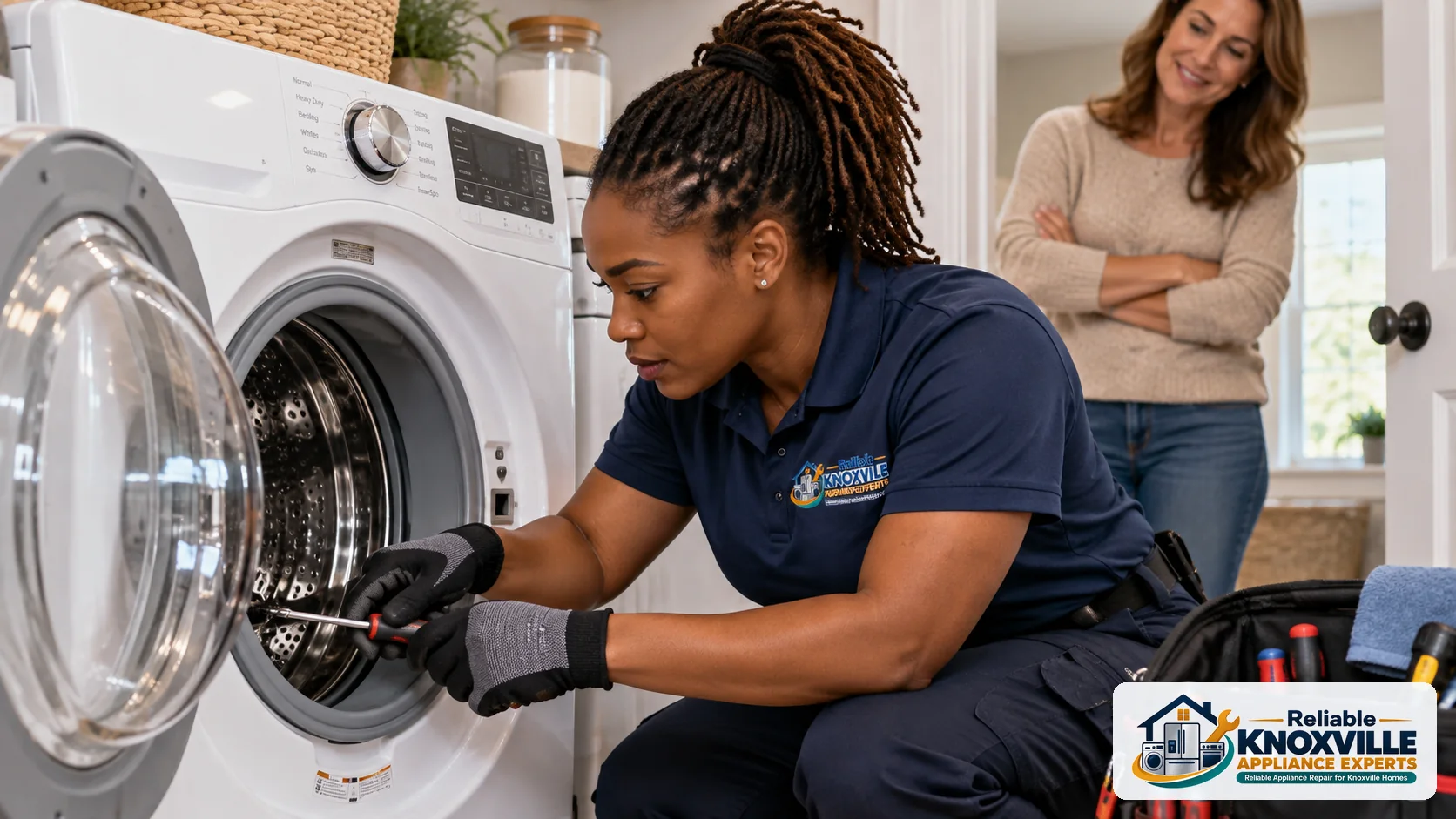
Opening the washer to find water creates two immediate questions: how to protect the laundry room, and whether the appliance can safely finish its cycle. The answer depends on the actual symptom. Water visible in the drum is different from clothes that remain unusually wet after the drum has emptied. Neither observation proves that the drain pump needs replacement. This guide gives you a safe way to describe the issue, make basic checks, and decide when to stop. Front-load and top-load designs differ, so instructions from a similar-looking machine should not replace the manual for your exact model.
Identify Whether the Problem Is Drainage or Spin
Before changing anything, record whether there is a visible pool in the drum, whether the cycle finished, and whether an error code appeared. Also note if the washer stopped before spinning or if the clothes are wet despite an empty drum. That distinction helps prevent a drainage enquiry from becoming a request for the wrong repair.
Check the selected cycle and spin option in the manual. A low-spin selection, an uneven load, or excessive suds can leave laundry wetter than expected. Whirlpool's washer drainage guide discusses these possibilities alongside drain restrictions. Do not add detergent or begin another complete wash just to test the machine. If there is no leak or other warning sign, use only the manual's recommended recovery or drain procedure.
Check the Visible Drain Path Without Disconnecting It
Look at the accessible section of the drain hose for a sharp bend, crushing, or an obvious installation change. Do not drag a full washer across the floor or pull a hose from a standpipe while water remains inside. A recently moved appliance is useful context for an installer or technician, especially if the problem began immediately afterward.
Drain-hose height, insertion depth, and routing are model-specific. Compare them with the installation instructions rather than applying a measurement from another brand. A household standpipe that overflows while water is being discharged may need plumbing evaluation rather than an appliance part. GE's top-load drainage guidance also identifies hose restrictions and installation as checks. Report where water is backing up; avoid repeatedly reproducing an overflow.
When a Filter Check Is Appropriate
Some machines have an owner-accessible pump filter or emergency drain tube. Others do not. Find the exact model's maintenance instructions before opening a small front panel or turning a filter cap. A filter that looks accessible in an online video may be part of a different design.
If your manual specifically allows the task, disconnect power as directed, let hot wash water cool, and prepare to contain residual water using the manufacturer's method. Never loosen a filter cap all at once with a full tub behind it. Stop if you cannot safely control the water or if access requires cabinet removal. Whirlpool's filter-maintenance manual example demonstrates why the drain procedure belongs to a particular model. Cleaning debris does not establish that the pump, lock, or control is otherwise healthy.
What a Humming Pump or Locked Door Can Tell You
A hum can mean that something is energized without confirming that water is moving normally. A silent machine also does not identify a failed pump: the cycle may not have reached draining, or a control or locking condition may interrupt it. Make a short note of the sequence instead of reaching inside to check a moving component.
Close a lid normally and check for an obstruction, but never bypass a lid switch, defeat a door lock, or force a locked door. If water is near an outlet or electrical part, keep clear and get assistance rather than reaching across the wet area. Internal pump access, wiring tests, and lock diagnosis belong to qualified personnel. For a continuing problem, review washing machine diagnostic service and call with the observed sequence rather than ordering a pump by sound alone.
Prepare a Useful Service Request
Have the brand, model, approximate age, selected cycle, and any displayed code ready. Describe whether the drum contains water, whether the household drain backed up, and what happened during one attempted recovery. Note any recent move, installation work, detergent change, or previous repair. These are clues for an enquiry, not proof of a particular fault.
Ask whether the technician can work on your model and whether a stacked or closet installation changes access. Confirm the diagnostic charge, what an estimate will include, and how parts availability affects the next step. Service in Knoxville and nearby communities is subject to address and appointment availability. If the quote is substantial, compare the whole repair decision using the major-appliance repair-or-replace guide. Do not continue running a leaking washer while waiting for an appointment.
Frequently Asked Questions
Why are my clothes wet when there is no standing water?
The washer may have emptied but not completed an effective spin. Check the cycle, load balance, and detergent guidance in your manual; ongoing problems require model-specific diagnosis.
Does every washing machine have a filter I can clean?
No. Filter design and accessibility vary. Only follow owner-maintenance instructions for your exact model, and stop if accessing the filter requires disassembly or water you cannot safely contain.
Does a humming washer mean the drain pump is bad?
No. A hum alone does not establish whether the pump is blocked, mechanically damaged, or operating under another condition. Describe the sound together with the water level and cycle sequence.
Should I force the door open to remove wet clothes?
No. Follow the manufacturer's drain and door-release procedure. Forcing a lock can damage the machine and release retained water; request help if the approved procedure cannot be completed safely.
Discuss Your Appliance Problem in Knoxville
Call with your brand, model, symptoms, and service address. Coverage is approximately 10–12 miles from Downtown Knoxville, subject to address and appointment availability. Gas, induction, built-in, and specialty-brand support must be confirmed before booking.