
Dryer Diagnostics · Homeowner Guide
Dryer Not Heating: Heating Element vs. Thermal Fuse
AI-assisted educational guide with manufacturer references. No technician review or first-hand repair experience is claimed.
- Fuse behavior distinguished
- No safety-device bypasses
- Model wiring differences noted
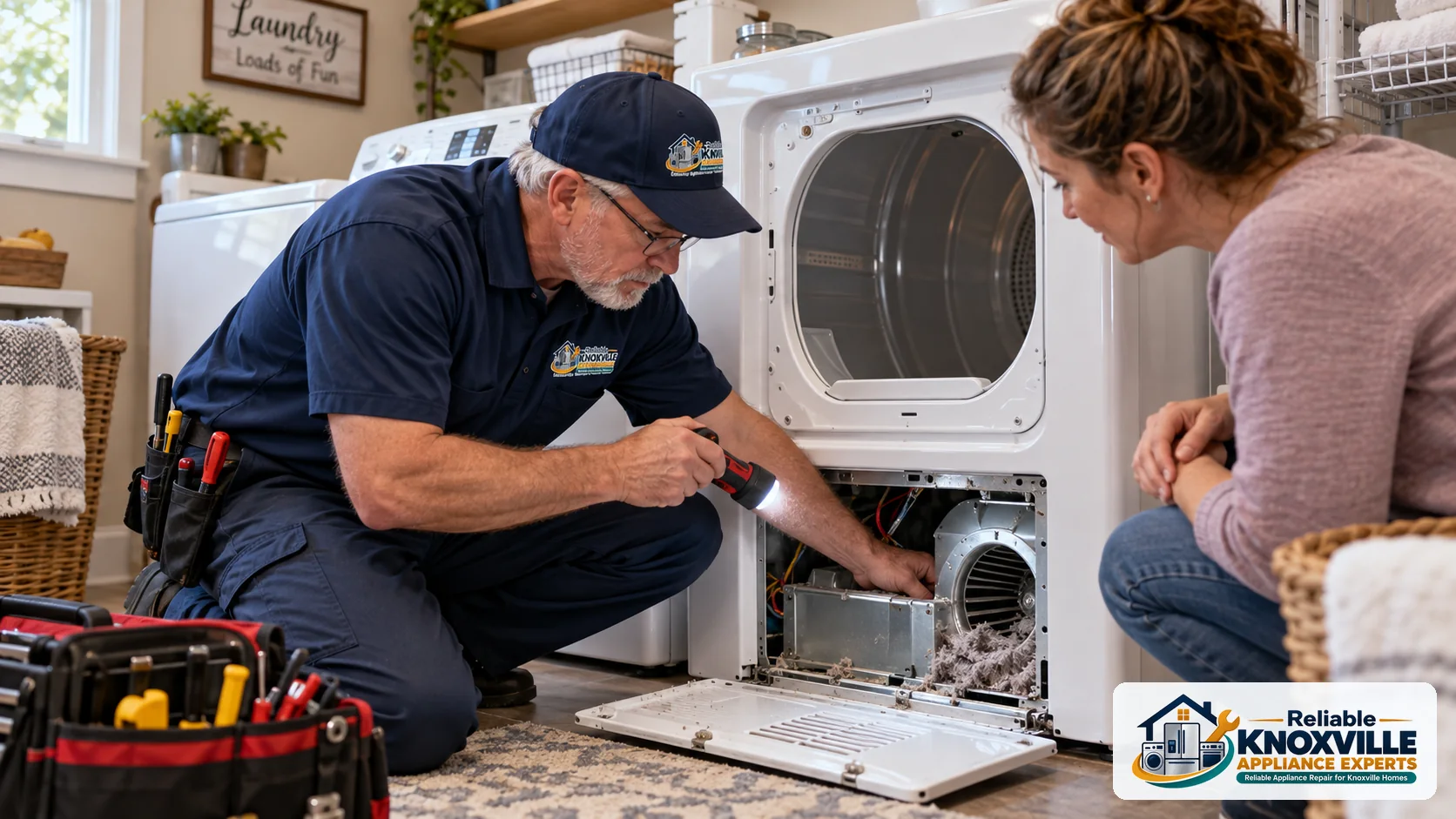
A dryer running with cold, damp clothes can make an inexpensive replacement part look like an easy answer. The difficulty is that several unrelated faults can produce similar results, and a part's name does not reveal how it is connected in your machine. This guide explains the difference between a heating element and a thermal fuse without asking you to open the cabinet or test live electricity. It focuses on conventional household dryers; heat-pump and other ventless designs need their own manual-specific approach. Gas dryers use a burner system rather than the electric heating element discussed here, so fuel type matters from the start.
What the Heating Element and Thermal Fuse Do
The heating element is part of an electric dryer's heat-producing system. A thermal fuse is a protective device, not a heat source. The two names are sometimes used loosely in repair discussions, which can lead someone to buy a fuse, thermostat, or thermal cutoff that is not the part their model requires.
Whirlpool's dryer no-heat overview treats heating-system faults, power, and protective devices as separate possibilities. A failed fuse should prompt investigation of why it opened, not simply a replacement and another load. Never bypass a safety device, substitute a different rating, or tape wires together to test whether heat returns. A repair needs the correct part and an understanding of the underlying condition.
Why Drum Movement Does Not Settle the Diagnosis
Some advice says that a tumbling dryer cannot have a failed thermal fuse. That is not a reliable rule across models. In a particular Whirlpool technical sheet, the thermal fuse is in the motor circuit for listed designs. That example explains why a fuse may stop operation altogether; it does not describe every dryer. Other temperature-protection devices and wiring arrangements must be identified from the exact schematic.
A dryer can also have enough electrical supply for some functions without normal heating. Whirlpool's electric-dryer support guidance distinguishes the motor and heating supply requirements. This is a reason to request qualified electrical evaluation, not an invitation to probe an outlet, tighten terminals, or test an energized appliance yourself.
Safe Checks for a Dryer That Runs but Does Not Heat
Confirm that the selected program actually uses heat. Air-only and similar settings intentionally tumble without heating. Compare the load with the manual's guidance and note whether clothes were already unusually wet when they left the washer. Otherwise, a washer spin problem can be mistaken for poor dryer performance.
Clean the lint screen as directed and visually inspect an accessible exterior vent opening from a safe location. Do not climb, remove guards, or move the dryer to reach a hidden duct. A crushed connector, long drying time, or poor exhaust flow deserves evaluation; repeated cycles are not a repair. The U.S. Fire Administration's dryer guidance emphasizes lint and vent maintenance. Stop using the dryer if it smells scorched, shows damage, or repeatedly overheats.
Record the Pattern Before Replacing Parts
Useful observations include whether heat is absent throughout a cycle, starts and then disappears, or seems present while clothes still take too long to dry. Note the program, approximate load size, displayed codes, and when the change began. Avoid running several extra loads just to gather evidence. One clear description is more valuable than repeated operation of a suspect appliance.
Do not infer that an airflow problem, heating element, sensor, or control has failed from the pattern alone. Ask a technician how the diagnosis will distinguish the possibilities on your model. If a protective device is replaced, ask what related condition was evaluated. A written estimate should identify the actual repair scope and any separate vent-service requirement. Our residential dryer diagnosis page explains how to make a service enquiry without promising a particular part or outcome.
Gas, Ventless, and Access Limitations to Confirm
Tell the service provider whether the dryer is electric, gas, heat-pump, or another ventless type. A generic element-versus-fuse comparison cannot substitute for that distinction. Gas dryer service requires confirmation of appropriately qualified technician support. Do not operate gas valves, disconnect fuel lines, or attempt burner adjustments using an electric-dryer guide.
Also describe a stacked installation, closet enclosure, or difficult access. Ask whether the technician can safely access the appliance and whether the quoted work includes the exhaust path. For Knoxville-area enquiries, confirm your address and appointment availability before making plans around a visit. Have the brand and model ready, and consider both the diagnosis and the appliance's general condition before authorizing a repair. If wet clothes began at the washer, the washer drainage guide helps separate the two problems.
Frequently Asked Questions
Can a dryer tumble with a blown thermal fuse?
The answer depends on the model and which protective device is being described. Some thermal fuses interrupt the motor circuit. Use the exact wiring information and qualified diagnosis rather than drum movement alone.
Can I bypass the fuse briefly to test the dryer?
No. Bypassing temperature protection creates a hazardous operating condition. Stop using the appliance and arrange diagnosis of both the failed protective device and the condition that caused it to open.
Does a gas dryer use the same heating element?
No. A gas dryer uses a burner system. Its ignition, fuel, and safety controls require a different diagnostic approach, and qualified gas-appliance support must be confirmed before booking.
Is a cold dryer always a part failure?
No. A non-heated setting or an electrical supply issue may also explain the symptom. Check ordinary controls and manual guidance; leave electrical measurements and internal testing to qualified personnel.
Discuss Your Appliance Problem in Knoxville
Call with your brand, model, symptoms, and service address. Coverage is approximately 10–12 miles from Downtown Knoxville, subject to address and appointment availability. Gas, induction, built-in, and specialty-brand support must be confirmed before booking.