
Refrigerator Care · Homeowner Guide
Signs Your Refrigerator Is Failing Before Food Spoils
AI-assisted educational guide with manufacturer references. No technician review or first-hand repair experience is claimed.
- Food-safety source linked
- Temperature checks explained
- Cooling symptoms kept in context
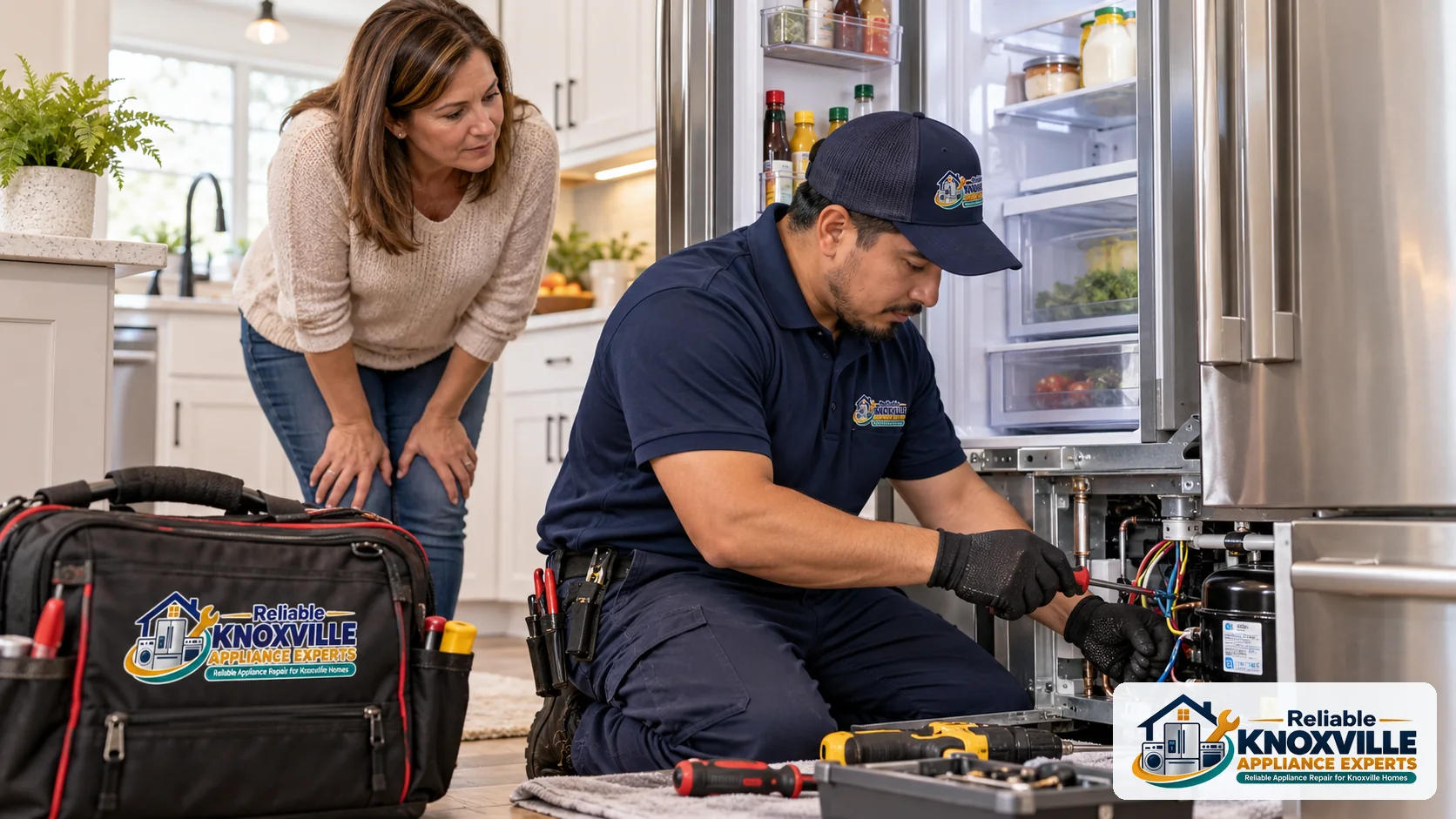
A refrigerator can look normal while its cooling performance changes. The light still works, the display shows a familiar setting, and the compressor may sound busy. Those observations do not establish that food is being held safely. This guide explains how to recognize a meaningful change, separate a maintenance issue from a possible component fault, and prepare a useful service enquiry. It is written for household refrigerators, not as a model-specific repair procedure. Start with the owner's manual and the temperature inside the cabinet rather than guessing from a noise or ordering a part from a symptom alone.
Start With Temperature, Not the Control Setting
A setting on the control panel is a target, not necessarily the temperature beside your groceries. Use a separate appliance thermometer and note when you read it, which compartment it is in, and whether the door was recently open. The FDA recommends a refrigerator temperature of 40°F or below and a freezer at 0°F. Its refrigerator thermometer guidance also explains what to do when cold storage is interrupted.
Do not wait for an unusual smell before acting. Keep doors closed while arranging alternative cold storage, and follow the FDA's food-specific advice if temperature history is uncertain. A service appointment does not make food safe during the wait. Record what you know about the interruption so the cooling problem and the food-storage decision can be handled separately.
Warning Signs Worth Recording
A change in the cooling pattern
Notice whether both compartments are warming or only the fresh-food section. Record if the problem follows grocery loading, frequent door openings, a power interruption, or a change in the room temperature. A refrigerator running constantly is an observation to investigate, not proof that the compressor is failing.
Moisture, frost, and changing sounds
Photograph recurring frost or condensation before it disappears. Note where water collects and whether a noise occurs when a door opens, during startup, or throughout operation. Clicking, humming, and water sounds can have different meanings across models. Describe a sound and the accompanying temperature change instead of assigning it to a specific component. A short recording can communicate the symptom more clearly than the word 'loud.' Keep hands and tools away from moving parts.
Safe Checks Before Requesting Diagnosis
Look for packages preventing the door from closing or covering an internal air vent. Check the visible gasket for debris and damage, and verify that the controls were not accidentally changed. Follow your own manual for cleaning and ventilation clearances; there is no universal coil-cleaning or clearance instruction for every refrigerator. Whirlpool's cooling troubleshooting overview identifies airflow, seals, installation, and internal faults as separate possibilities.
Do not pull a heavy built-in unit out of cabinetry or remove an electrical cover to continue these checks. If a manual identifies a cleaning task as owner maintenance, disconnect power as it directs. Leave sealed-system work, refrigerant handling, and internal electrical testing to qualified personnel. Stop using an appliance with a damaged cord, burning smell, or electrical damage; do not reach for a plug through standing water.
How to Make a Cooling Service Enquiry Useful
Prepare a simple timeline: when cooling last seemed normal, when you first measured a problem, and what changed afterward. Include the model number, both compartment temperatures, any display code, and whether the refrigerator is freestanding or built-in. Photograph the label only when it is readily accessible. There is no need to move the appliance to find a hidden label.
Ask what the diagnostic visit includes, whether your installation can be accessed, and whether parts or specialist support may be needed. Share that this is a cooling enquiry rather than requesting a particular replacement part. For Knoxville-area households, service is subject to address and appointment availability within the local coverage area. Built-in and specialty refrigeration support must be confirmed before booking. Explore refrigerator diagnosis and repair options if the problem continues.
Use the Diagnosis to Compare Repair and Replacement
A cooling symptom alone does not tell you whether replacement is justified. Request the identified fault, an itemized estimate, likely parts availability, and any limitations of the proposed work. Consider the cabinet condition and previous repair history alongside the repair price. An appliance with a single repairable fault presents a different decision from one with repeated failures and difficult parts access.
Compare the repair with a suitable replacement's delivered and installed cost, including any cabinet or connection changes. Avoid using age or a fixed percentage as an automatic verdict. If energy use is part of your decision, compare actual model information rather than a promised universal saving. Our repair-versus-replacement guide provides a worksheet for organizing those costs and questions without pretending to predict an appliance's remaining life.
Frequently Asked Questions
Does a refrigerator running constantly mean it is failing?
Not by itself. Record temperatures and operating conditions. Frequent door opening, loading, installation conditions, or an internal fault may need different responses; persistent poor cooling warrants diagnosis.
Can the freezer stay cold while the refrigerator warms up?
Yes. Record both temperatures and keep the compartments distinct in your service enquiry. Different designs use different cooling and airflow arrangements, so this symptom does not identify one universal failed part.
Should I turn the controls to the coldest setting?
Follow your model's manual. Changing the setting repeatedly makes the history harder to interpret and does not fix a component problem. Protect food and arrange help if measured temperatures are not suitable.
Can I book service for a built-in refrigerator?
Call with the brand, model, installation details, and address to confirm support. Qualified technician availability, access requirements, and parts availability must be checked before booking.
Discuss Your Appliance Problem in Knoxville
Call with your brand, model, symptoms, and service address. Coverage is approximately 10–12 miles from Downtown Knoxville, subject to address and appointment availability. Gas, induction, built-in, and specialty-brand support must be confirmed before booking.