
Seasonal Advice · Homeowner Guide
Protecting Garage Appliances from Knoxville Weather
AI-assisted educational guide with manufacturer references. No technician review or first-hand repair experience is claimed.
- Ambient model ratings matter
- No universal garage-kit claims
- Storage & room temperatures separated
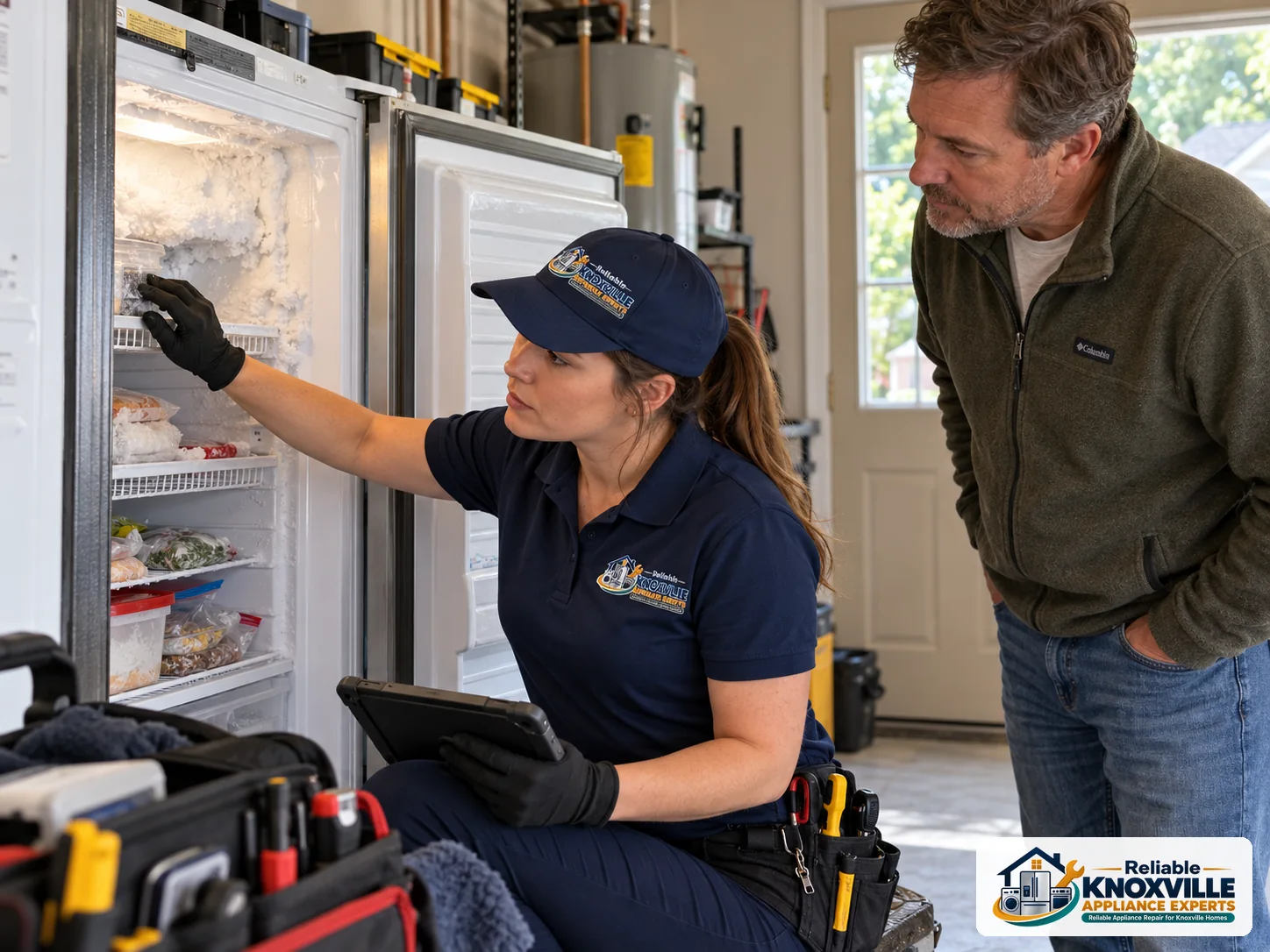
Moving an older kitchen refrigerator into a garage can seem like a simple way to gain storage. The important question is whether that particular appliance is designed for the conditions it will encounter. An unconditioned Knoxville-area garage may be much different from the kitchen, and a weather forecast does not measure the air beside the appliance. This guide explains what to verify before relying on garage cold storage. It does not assume a local temperature extreme, recommend a particular replacement, or promise that an accessory will convert an indoor model into an all-weather unit. Use the manufacturer's installation limits for your exact model.
Find the Model's Approved Ambient Range
Locate the model number and the installation section of its manual. Look for minimum and maximum surrounding-air temperatures, location restrictions, and clearance requirements. Do not use a rating from a visually similar refrigerator, a retailer's general category, or a different appliance type. A freestanding freezer's rating does not automatically describe a refrigerator-freezer combination.
GE's garage-ready top-freezer guidance gives 38°F to 110°F for the models it describes. That is a manufacturer-specific example, not a rating for your appliance. Whirlpool's all-refrigerator support example describes a different approved environment. The useful conclusion is to verify the model, not choose whichever published range is widest.
Why Both Cold and Heat Can Matter
Cooling controls respond to the appliance's design and operating environment. In some refrigerator-freezer arrangements, cold surroundings can affect how often cooling is called for, even though the freezer still needs appropriate operation. GE's installation-temperature guidance explains how cold surroundings can affect thermostat response. A cool garage is not proof that frozen food is being held correctly. Likewise, hot surroundings can challenge heat rejection and expose a location or ventilation problem.
Record what actually happens rather than assuming that every winter or summer symptom has the same cause. Note the garage temperature near the unit, both compartment readings, and whether the symptom changes with the weather or door use. Keep the appliance's approved range alongside those notes. A cabinet that performs poorly within its approved conditions may need diagnosis; one outside its approved environment needs a location decision as well.
Garage Kits Are Not a Universal Conversion
Do not order an accessory just because it is advertised as a garage kit. Ask the manufacturer whether a kit is approved for your complete model number, what problem it addresses, and what operating limits remain after installation. A heater accessory intended for a particular control arrangement is not a general cooling upgrade or a guarantee of operation in freezing or extreme heat.
Do not improvise a heater, bypass a thermostat, alter wiring, or add insulation around a cabinet to force different operation. Those changes can create new hazards and obstruct required ventilation. If the manufacturer does not approve the proposed location or modification, do not treat an online workaround as authorization. Ask about relocating the appliance or a model rated for the intended environment. Confirm installer qualifications before arranging any accessory work.
A Practical Garage Storage Check
Keep storage boxes, tools, and household clutter clear of the ventilation space specified in the manual. Look for a door that is obstructed, a visible damaged seal, or an installation exposed to water. Use the specified electrical connection; do not improvise a power arrangement or route a cord where it can be crushed. Request qualified help if the connection or location is unsuitable.
Use appliance thermometers rather than judging food by touch. FoodSafety.gov's cold-storage guidance uses refrigerator storage at 40°F or below and freezer storage at 0°F or below. Food-storage targets and the surrounding-air rating are different measurements. If storage conditions are unsafe or uncertain, address the food immediately using food-safety guidance rather than waiting for a service appointment to decide.
Prepare for a Location or Cooling Evaluation
For a service enquiry, provide the appliance type, complete model number, whether the manual approves garage use, and the measured temperature history. Explain if the appliance recently moved from indoors or if a symptom follows a specific weather change. Include whether it is an upright freezer, chest freezer, or refrigerator-freezer combination. Do not assume the same control explanation applies to every type.
Ask whether a cooling fault, installation limitation, or both need assessment. Knoxville-area appointments depend on address and availability; specialty refrigeration, built-in units, and accessory work require model-specific confirmation. Review freezer diagnostic service availability or the refrigerator service information for the appropriate enquiry. Before buying a replacement, compare the actual rated environment and installed costs. Replacing one unsuitable garage appliance with another indoor-only model leaves the location question unanswered.
Frequently Asked Questions
Does garage-ready mean a refrigerator can work in freezing weather?
Not necessarily. Check the exact approved range. A garage-ready label covers specified conditions, not unlimited temperatures, and ratings differ between models and appliance types.
Can a garage kit make any refrigerator suitable?
No. Compatibility, purpose, and remaining limits are model-specific. Obtain manufacturer confirmation before buying a kit, and do not improvise wiring, heaters, or thermostat changes.
Is the outdoor forecast enough to assess the appliance location?
No. Measure conditions beside the appliance and compare them with its installation requirements. An enclosed garage can differ from the outdoor forecast and from another area of the same garage.
Should a chest freezer use the same rating as a refrigerator?
No. Use the freezer's own manual and complete model number. A refrigerator range, accessory recommendation, or control explanation should not be transferred to a chest freezer automatically.
Discuss Your Appliance Problem in Knoxville
Call with your brand, model, symptoms, and service address. Coverage is approximately 10–12 miles from Downtown Knoxville, subject to address and appointment availability. Gas, induction, built-in, and specialty-brand support must be confirmed before booking.